


Science
Plasmons call the tune in new graphene-based terahertz laser

Terahertz radiation falls between the infrared and microwave regions of the electromagnetic spectrum and has the very useful property of passing through clothing, packaging and other common materials. As a result, terahertz radiation shows great promise in a wide range of applications, including security and medical scanning, drug and explosives detection as well as wireless communications. However, it has proven to be very difficult to create practical terahertz sources and detectors - so applications have so far been limited.
More...
The trouble with time travel
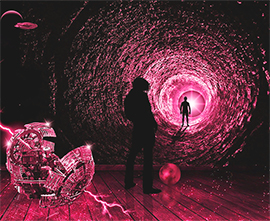
The Grandfather Paradox
Time travel theory
A time traveller goes back in time and either accidentally or deliberately (if you are in a macabre mood) kills his own grandfather, before the time traveller's father has been conceived. So the time traveller is never born, so he never goes back in time, so his grandad never dies, so the time traveller is born. And so on.
More...
Top 10 subatomic surprises
Wolfgang Pauli, the Austrian physicist who predicted the neutrino's existence, also won a Nobel, but not for the neutrino (he did a lot of other very important stuff). He might have won for the neutrino except that his prediction came in the form of a letter to physicists attending a conference that Pauli decided to skip so he could go to a dance.
More...
The Universe Is (Probably) Not a Hologram

Researchers at the Fermi National Accelerator Laboratory in Illinois recently carried out an experiment to prove whether or not the entire universe, as we know it, is nothing more than a hologram. To find evidence of our holographic existence, researchers used a so-called Holometer to probe for the universe's "pixels." Long story short, they didn't find what they were looking for.
More...
The incredible truth about time
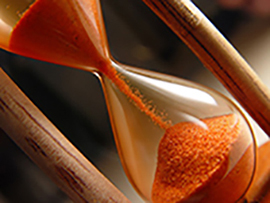
Time: it rules our lives, and we all wish we had more of it. Businesses make money out of it, and scientists can measure it with astonishing accuracy. In 2013, American researchers unveiled an atomic clock accurate to better than one second since the Big Bang 14 billion years ago.
But what, exactly, is time? Despite its familiarity, its ineffability has defied even the greatest thinkers. Over 1,600 years ago the philosopher Augustine of Hippo admitted defeat with words that still resonate: "If no-one asks me, I know what it is. If I wish to explain it to him who asks, I do not know."
More...
The Unknown Universe - 10 questions still confounding cosmologists
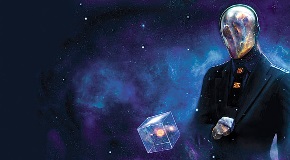
1. How did it all begin?
Cosmologists talk about the Big Bang, but they have no idea what it was. "We are sure that the early phase of the Universe was hot and dense," says Prof Tim O'Brien, an astronomer from Jodrell Bank, University of Manchester. "But what triggered the Big Bang is still very much open for investigation."
In March 2014, astronomers using an instrument called BICEP2 thought that they had seen evidence for a colossal increase in the expansion of the Universe at the moment of the Big Bang. This would fit theoretical ideas called inflation. Sadly, it turned out to be space dust contaminating the signal.
More...